Bennington Historical Information
300 Pleasant St: Julius and Sophia Norton House, Built 1846 | ||||
|---|---|---|---|---|
 | ||||
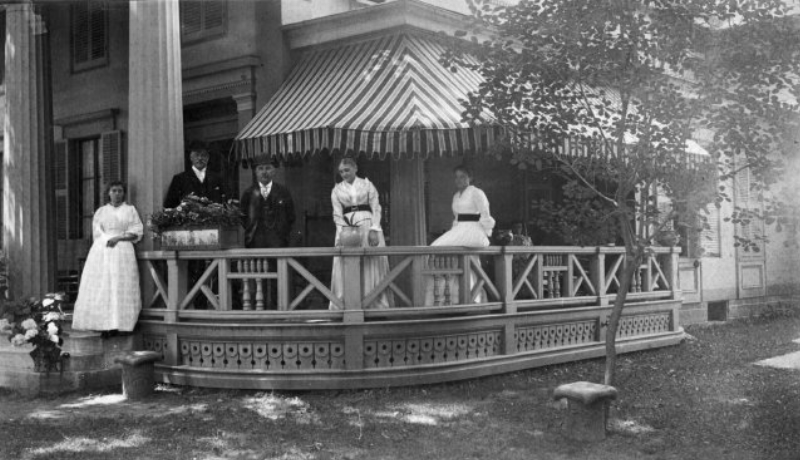 | ||||
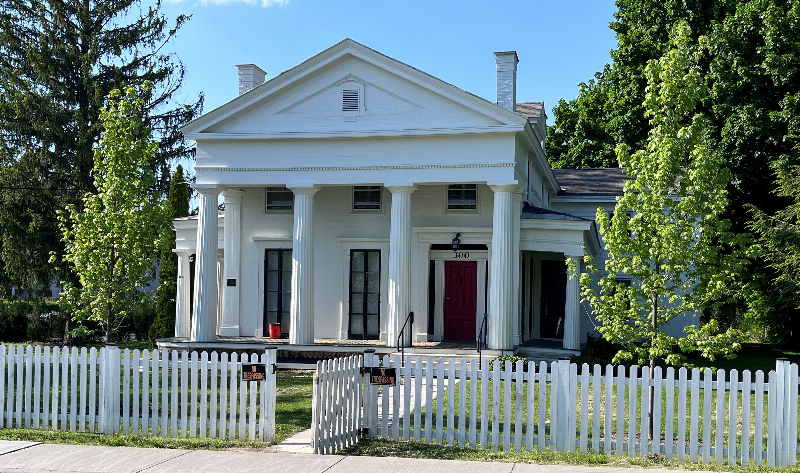
One of the best surviving examples in Vermont of a high-style Greek Revival mansion, this house was built in 1846 for Julius and Sophia Norton, owners of the Norton Pottery. Located by then at the corner of Pleasant and Park Streets, the Norton Pottery employed dozens of potters to produce “stone-ware” and, having been in operation from various Bennington locations since 1785, was one of the oldest such operations in the state. The house is listed as an individual structure on the National Register of Historic Places. This Greek Revival style departs from the earlier Federal styles found in Old Bennington demonstrating the break from Old Bennington to the new town cemter. | ||||
Description from the 1987 historical survey: | ||||
2 1/2-story, 3x4-bay, temple-front, high-style, Greek Revival house. Tetrastyle portico incorporates aris-fluted Doric columns without bases standing on low deck, broad denticulated entablature that continues along horizontal eaves of side elevations, and flush-boarded tympanum with recessed triangular panel inset with segmental-headed louver; raking cornice/frieze of pediment lacks denticulation. Corner pilasters. Recessed main entrance in right bay framed by paneled pilasters and denticulated entablature; paneled door framed in turn by slender paneled pilasters, full-length sidelights, and transom; sidelights . and transom were reglazed with grapevine-motif stained glass in late 19th century. Wide marble steps. Room-height French doors on first story. Recessed ceiling of portico exposes second story with 2/2 sash. All windows have architrave surrounds with cornice caps. 1-story, hip-roofed, Greek Revival porch with matching reduced columns and denticulated entablature on both east and west sides of main block; east porch has 2-bay, flush-boarded rear half with paneled spandrels. Kneewall windows of 2/2 sash punctuate main eaves entablature. Pedimented gabled dormer on both east and west roof slopes has 3-part face with central 6-pane window flanked by molded panels and continuous surround with corner blocks; raised sunburst on tympanum; cheeks sheathed with hexagonal slate shingles. Interior brick chimney with corbeled cap at each corner of main roof. 2-story, 2x2-bay gable-roofed ell with corner pilasters, denticulated entablature along horizontal eaves, and cornice returns projects from east side of main block. Pent eave supported by decorative brackets at gable peak. Mostly paired sash; paneled spandrels below first-story windows. 2-story, gable-roofed rear wing with denticulated entablature along horizontal eaves. 1-story, 2-bay, shed-roofed wing with French doors on west side. 2-story, gable-roofed ell projects from rear of west side of wing and has denticulated entablature, cornice returns, corner pilasters, and same 3-paneled motif found on roof dormer faces in gable peak. 3-bay west gable front of ell has central entrance sheltered by gabled door hood with incised gable screen and brackets. l-story, 1-bay-deep, shed-roofed rear addition with false front on west side. Stone foundation. Flush vertical-board and clapboard sheathing. Slate roof. One of the finest examples of Greek Revival style in Bennington.
Carriage Barn, c. 1846 1 1/2-story, 2x4-bay, gable-front carriage barn. 2 three-part carriage doors facing Park St. Finished room at rear of first story. Cornice returns. 6/6 sash. Clapboards. Asphalt roof shingles. This barn served as stable for the Norton pottery works on the opposite side of Park Street. | ||||